Key takeaways
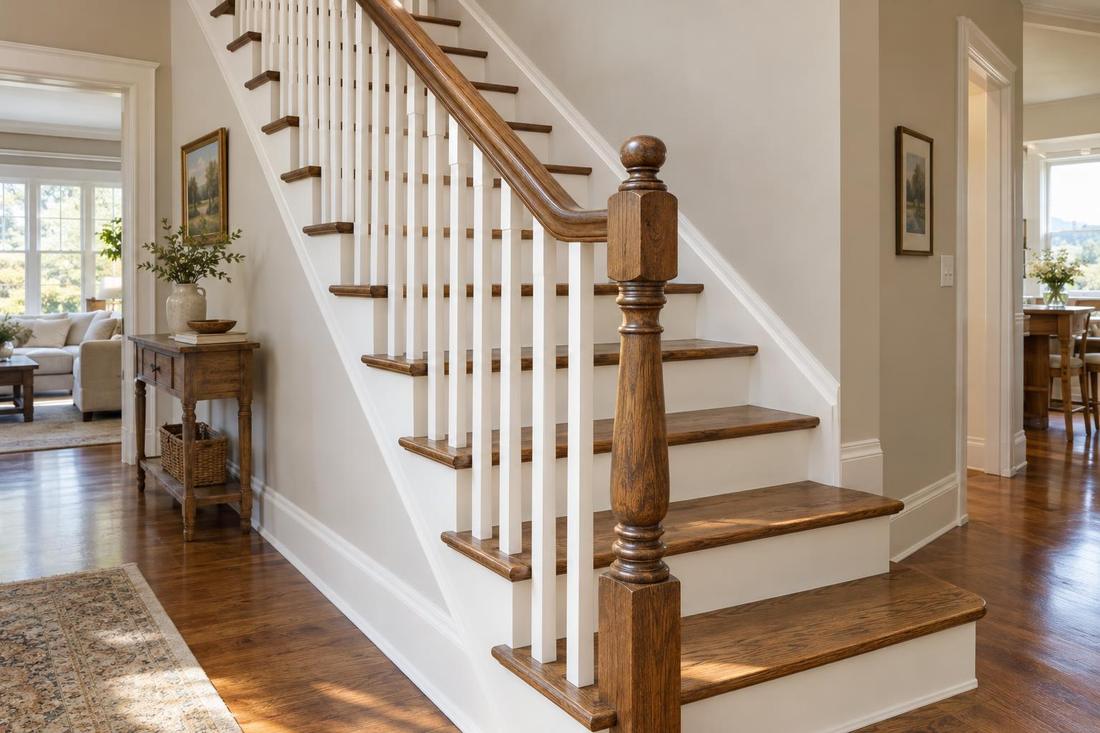
- Handrails should feel solid and be easy to grip along the whole stair.
- Uneven risers and treads are a major trip hazard.
- Balusters should be closely spaced so a child cannot slip through.
- Loose treads, newel posts and rails should be fixed promptly.
Check the handrail and posts
Grab the handrail and push and pull. It should feel solid, with no wobble at the posts or the wall brackets. A good handrail is easy to grip with your whole hand and runs the full length of the stairs. Newel posts that move usually need to be anchored into the framing.
Loose fastenings are common in older homes and are usually repairable.
Look at treads and risers
Walk the stairs and watch for steps that are loose, cracked, worn or uneven in height. A difference of even a fraction of an inch between risers can cause trips. Squeaks usually come from loose treads and are easy to fix, but they also hint at movement worth checking.
Check the lighting at the top, bottom and in between.
Balusters and guards
Gaps between balusters should be small enough that a four inch sphere cannot pass. Open stair sides and landings need a guard, and the height is set by local code. Replace missing or loose balusters and avoid decorative designs that a child could climb.
Older Nashville homes sometimes have wide gaps that were acceptable decades ago.
Outdoor and basement stairs
Exterior steps face water, ice and rot, so look for soft wood and loose handrails. Basement stairs often lack handrails or lighting. Adding a sturdy rail and a light is a simple upgrade that prevents falls.
Anti-slip treads can help on wet or steep steps.
Official sources and further reading
These are independent organizations. Links open in a new tab.
Quick answers
How high should a handrail be?
Codes often set it around thirty-four to thirty-eight inches above the stair nose, and local rules vary. A carpenter can check your stairs.
Can wobbly newel posts be fixed?
Often yes, by anchoring them to the framing with hidden hardware or bolts and refinishing the base.