Key takeaways
- Clean and inspect the deck at least twice a year.
- Reseal or restain when water stops beading on the boards.
- Check railings, stairs and fasteners for movement.
- Keep leaves, planters and furniture from trapping moisture.
Spring: inspect and clean
After winter, sweep off debris and look the whole deck over. Check for loose boards, popped fasteners, wobbling railings, soft spots and signs of insects. Wash the surface with a deck cleaner and a soft brush, and rinse gently.
Avoid high pressure that can damage soft wood.
Summer: protect
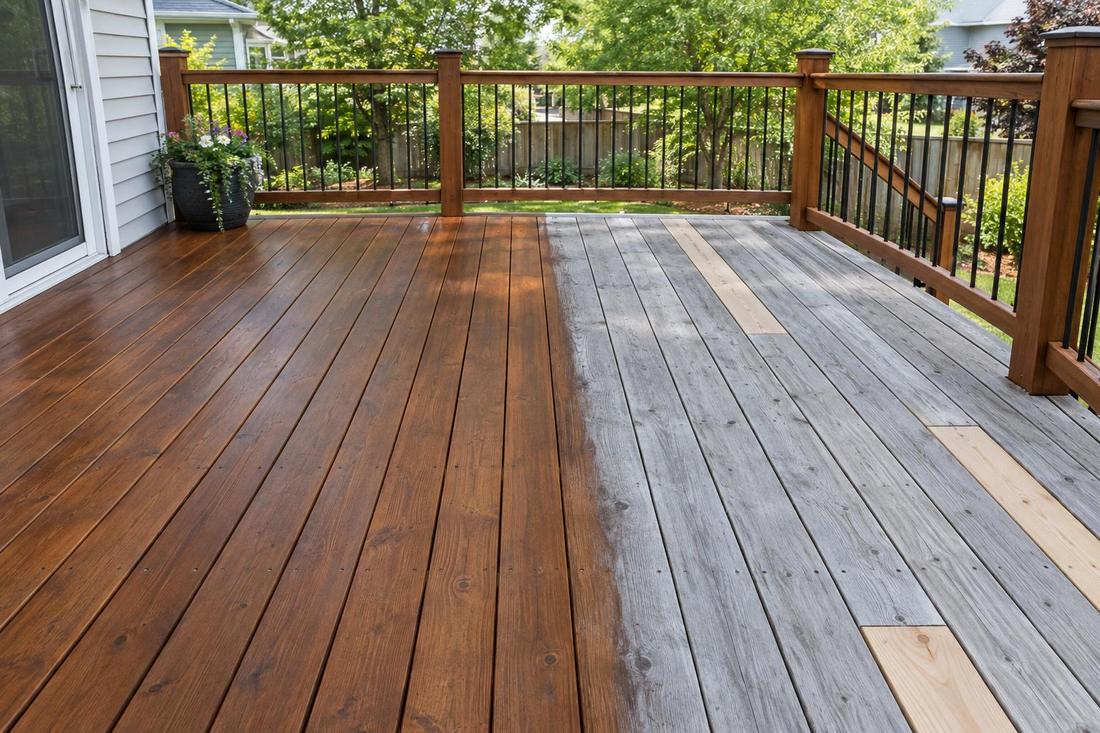
Test the finish by sprinkling water on the boards. If it soaks in instead of beading, the deck is ready for a new coat of stain or sealer. Apply it on a dry day in moderate temperatures, following the label.
In Nashville summers, avoid applying finish in direct midday sun, which can dry it too quickly.
Fall: clear and check
Leaves and debris hold moisture against the wood and make it slippery. Sweep regularly and clear gaps between boards. Check the ledger and flashing where the deck meets the house, and look under the deck for damage.
Move planters on saucers off the boards to avoid staining and rot.
Winter: handle with care
Use a plastic shovel for snow and avoid harsh de-icers that can damage the finish and fasteners. Keep stairs clear and safe. Watch for ice on shaded decks, which can be slippery for much of the winter.
Plan repairs for the next warm spell.
Official sources and further reading
These are independent organizations. Links open in a new tab.
Quick answers
How often should I stain my deck?
Many wood decks do well with a fresh coat every couple of years, depending on the product, sun and shade.
Should I power wash my deck?
Gently, if at all. Too much pressure can scar the wood. A deck cleaner and a soft brush is safer.