Key takeaways
- Start with how you use the space and what you need to store.
- Measure twice and mark outlets, vents, windows and pipes.
- Choose materials and finishes for the room: moisture, wear and light.
- Plan hardware and lighting early so they are built in.
Start with how you live
The best cabinets begin with a list: what you store, what you use every day and what is in the way now. A kitchen needs landing space and well placed drawers. A built-in library needs shelf heights for the books you own. A mudroom needs one place for each person.
Photos of what you have now help the designer see the problem.
Measure and mark the room
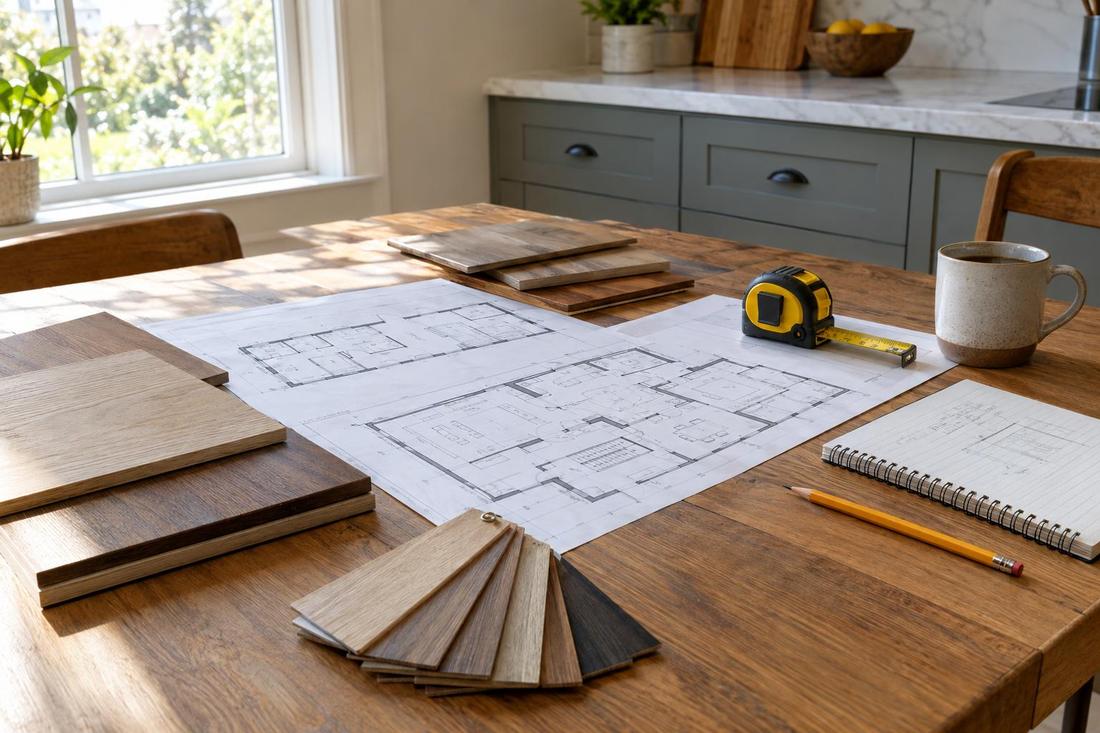
Measure the walls in several places, because most walls are not square. Mark windows, doors, vents, outlets, switches, pipes and anything else the cabinets must work around. Check ceiling height and any soffits. A site visit from the carpenter saves guesses.
Appliance sizes should be confirmed before the cabinets are built.
Materials, finish and hardware
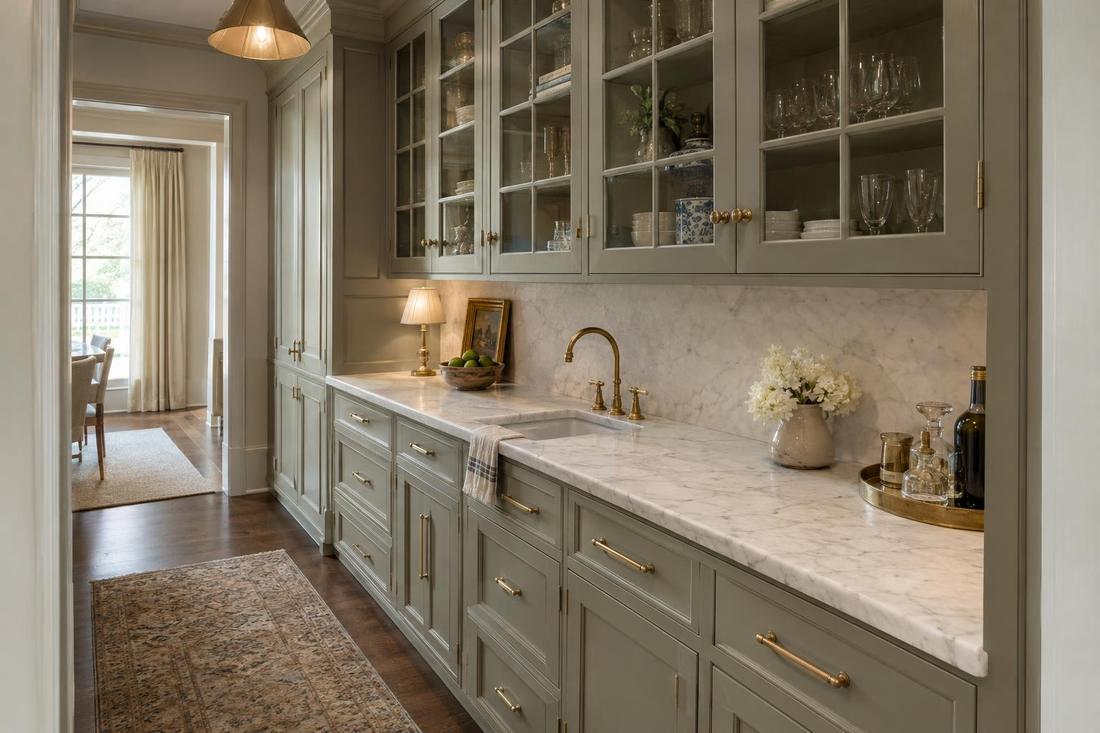
Plywood boxes with solid wood faces are a common, durable choice. Painted finishes show clean lines and hide grain, while stained finishes show wood character. Soft-close hinges, full-extension slides and good pulls make cabinets pleasant to use for a long time.
In Nashville homes with humidity swings, stable materials and a sealed finish matter.
Lighting, delivery and installation
Under-cabinet and in-cabinet lights are easier to plan now than later. Think about where wires come in and how the cabinets will be delivered and moved into the room. A careful installer shims, scribes and aligns every box so the finished run looks tight.
Plan countertop and backsplash timing with the cabinet installation.
Official sources and further reading
- Architectural Woodwork Institute
- National Association of Home Builders
- U.S. Forest Products Laboratory
These are independent organizations. Links open in a new tab.
Quick answers
How long do custom cabinets take?
It depends on size and finish, and the build, finish and installation follow a sequence. We give a schedule when the design is set.
Can built-ins be moved later?
They are made to stay, but they can be removed and reused in some cases. It is easier to plan carefully the first time.